
 Written by
 The former Harvard Square Theater in Cambridge closed in 2012, a major blow to one of the city’s busiest neighborhoods. The closing affected several neighborhood establishments, who saw a drastic drop in business. Some were even forced to shut down altogether.
City officials were given hope in 2015, when the property was purchased by a developer. But, as of the start of 2017, city counselors hadn’t heard from the theater’s new owner and were getting frustrated with the lack of progress at the site.
A signature property sitting empty and in disrepair, bringing down an entire neighborhood. Sounds like several properties in Clinton: Potential jewels that are either ignored or underused, with no hope or change for something better on the horizon.
Well, in Cambridge, that wasn’t good enough. In a bold move, the City Council used some muscle to push the owner toward something that would benefit Cambridge and its taxpayers. According to the Boston Globe, this past February the council announced it was considering an ordinance “to discourage real estate investors throughout Cambridge from the practice of ‘land banking,’ or sitting on vacant properties for long periods for later profit with no intention of redeveloping them.”
“A proposed ordinance would require owners to maintain vacant or abandoned buildings and impose fines if they remain empty beyond a designated period of time,” the story continues. “If after two years the properties remain vacant or abandoned, the city would begin eminent domain proceedings.”
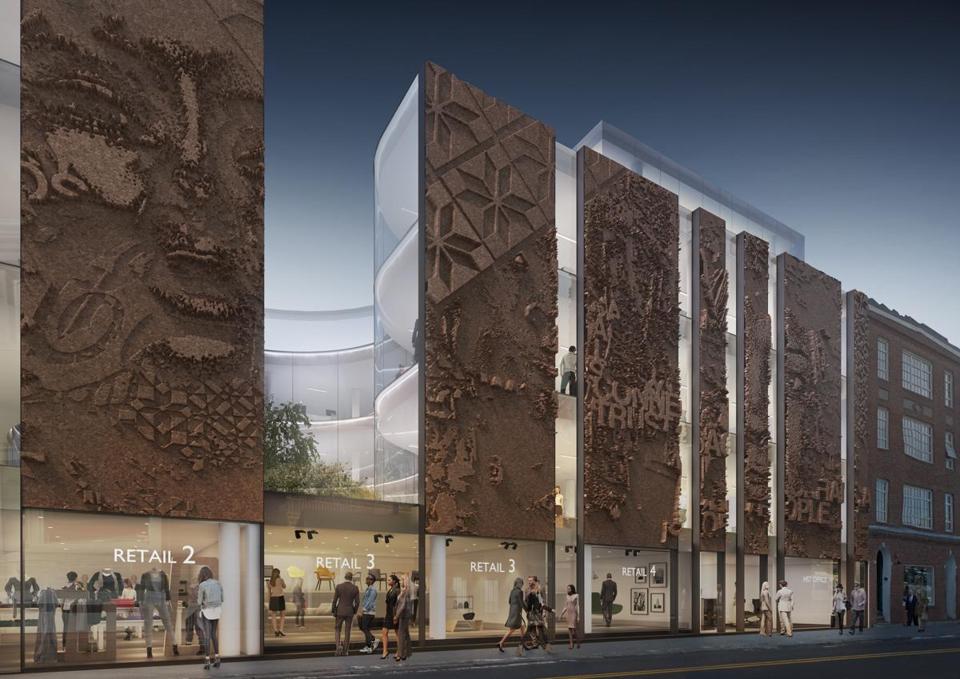
It worked. Today, the Globe is reporting that the building’s owner is planning to demolish the old building and replace it with a five-story office and retail complex, which includes a new cinema, a concession to neighbors.
“They hit it out of the park,” City Counselor Marc McGovern – who had threatened to take the property by eminent domain just months prior – told the paper. “The theater is coming back, the retail is going to liven up the street, and it’s a really spectacular-looking building that’s a piece of art itself.
“Normally, in these situations, it’s easy to find a couple things to complain about,” he added, “but honestly, I’m having a hard time finding one here.”
Neighborhood activists are similarly thrilled with the proposal. It’s a complete winner that will bring foot traffic and a sense of excitement back to a part of the square that had grown depressed.
Clinton isn’t Cambridge. I don’t want it to be. But I want it to be the best Clinton it can be, and in order to reach our potential we desperately need to develop cornerstone properties like the Bigelow Mills and the former Swift Building on Main Street at Depot Square.
Instead of shrugging our shoulders about owners’ non-cooperation, can’t we try something new? Abandoned buildings are demoralizing to residents and a disincentive to potential developers and business owners. And the longer they sit in disrepair, the closer they are to becoming unsalvageable altogether.
As selectman, I will not rest until any and all options for smart, aggressive economic development are exhausted. It’s too important not to care any more.
Only a handful of days are left before June 12 town election. If you agree with my ideas and my hopes for a better Clinton, tell your friends. Spread the word. Together we can make this town better for all of us.
 Sean Kerrigan, Clinton Select Board