How much is a better Clinton worth to you?

Tonight, the Select Board will cast its most important vote of the year: Setting the annual tax rate for residential and business property owners.

First, some background: In Clinton, where we have a split rate — one for residential property and another for commercial, industrial and personal property (CIP) — setting the tax rate involves deciding how much more the CIP rate will be. The total amount of property taxes raised remains the same. It’s simply a matter of how big a share each group pays.

After many years at the maximum shift, giving artificial relief to homeowners by shifting more of the burden onto business owners, the board began to chip away at the business rate in 2013. In 2018, I chaired a commission to look into the tax split and what might be best for Clinton going forward. 

The board adopted two recommendations from that commission

  1. Reduce the town’s tax rate split at the rate of 2 percentage points a year until a single rate is achieved. Chipping away at the split would spread out that impact to residential property owners over time, and demonstrate that the town is committed to improving the climate for businesses here. 
  2. Continue to expand exemption programs as allowed by law. Publicize the availability of these programs, and the senior work program, to increase participation among those potentially affected by a tax increase.

We’ve continued to stick to that plan, and the tax split now sits at an historic low of 1.50. It’s small but steady progress, a sign to the business community that we understand their part in making Clinton what it is.

Last year, after dramatic increases in property values, the board voted to hit pause on this plan and hold the split at 1.50. We received some great news from our Assessors Office on new growth this past week, and so I was looking forward to returning to our schedule and setting the FY2023 split at 1.48. 

After unanimously approving a reduction every year and mostly without debate, times have apparently changed. A majority of the board now seeks to reverse our course and increase the split again, possibly as high as 1.55.

We’re not elected to make easy decisions. We’re elected to make the right ones.

What does this mean? At my proposed split, the average residential homeowner would see an increase to their tax bill of $70, well below the average annual increase of $131.75 and the lowest increase in more than a decade. In turn, owners of a commercial/industrial parcel of the same value would see a decrease of $49 as we work to close the historical imbalance past boards have burdened us with.

However, under a split that’s increased to 1.55, the average residential homeowner would pay $11 less than last year, while the owner of a business property at the same value would see an astonishing jump of $339.

After five years of welcoming new businesses to town, we’re now going to thank them for choosing Clinton by taxing them 175 percent more for their property than a home of equal value.

It’s always a hard vote to take when you’re raising taxes. But that doesn’t mean lowering the split isn’t a smart vote. We’re not elected to make easy decisions. We’re elected to make the right ones.

Critics will say that the tax rate isn’t a major factor in attracting businesses. It’s certainly not the only factor, but it is a factor we can control. By voting to raise the split, we’ll be losing a key tool from our economic development toolbox. More important, we’ll be sending a message that Clinton is in danger of heading back to the bad old days when petty politics too often trumped good policy. 

Others might say that things have changed in the five years since the board adopted this policy. They’re right: Clinton is a better, stronger town, thanks in part to our reduction of the tax split.

In 2018, we had the 25th highest commercial tax rate in the state. Last year it had dropped to 46th, lower than Berlin, Maynard, Ayer, Worcester and Hudson.

Downtown is alive again, with half as many vacancies as in March 2017 and more new storefronts opening every month. Our town is growing, with total property valuation topping $2 billion for the first time ever. 

And the tax rate is just one part of a bigger story of financial stability and success. We continue to add money to our stabilization account, and last year Moodys raised our municipal bond rating. 

I know times are hard for many. But our commitment to our long-term plan of strengthening and broadening our tax base is worth the sacrifice. Clinton isn’t like other towns in our region. We were built on mills and stores and factories. Business and industry is part of who we are. We would not survive without them.

The bottom line is that Clinton is once again a place where people want to live, work and spend their free time because we were willing to make the hard decisions necessary to put us on this path. We cannot change course now.

If this about-face bothers you as much as it does me, speak up. Tonight’s hearing is the first item on the agenda and will start just after 7 p.m. Come and have your voice heard. Or email us today at selectmen@clintonma.gov. Every voice counts.

What you see is what you get

I wanted to expand on my comments during the Select Board’s recent discussion about getting more town boards and committees onto local cable television and the town’s YouTube account.

The Item had a story on the meeting on the front page of today’s paper.

When I joined the Cable Committee in 2017, one of my first goals was to get as much local government on television as possible. The Select Board and School Committee are fortunate in that all of our meetings are broadcast live on CCTV (and, once we expanded to web broadcasting, also YouTube). Archives of our meetings can also now be found online, for people who can’t watch live.

But, back then, most other town boards didn’t have that option. We didn’t have the personnel or equipment to cover so many meeting spaces, and some people didn’t see the need.

In 2019, when Ed Devault joined the Cable Committee and I took over as chair, we hired a full-time station director and started work on filling out programming. We both agreed that broadcasting more meetings wouldn’t just give us more content, but it would help you better see all the good work the rest of local government does. We really saw it as a win-win, both for our rebooted cable channel and the community at large.

So I have to say I was disappointed to learn that the Council on Aging voted unanimously last month to keep their meetings off the air. I guess I can understand how some people who aren’t accustomed to a spotlight might feel uncomfortable in it. And I understand that the majority of people who work in town government don’t do it to get famous or to draw attention to themselves.

As an independent board, it was a unanimous decision by the COA board to not video meetings for Community Television. The overall feeling is that the public is well aware of the activities and programming provided by the COA and the logistics of videotaping could impact scheduled activities at the center and would be redundant for people who would be interested in the schedule and activities of the COA.

Council on Aging Chair James LeBlanc, in an September 22 email to Select Board Chair Matt Kobus

What I don’t understand is how anyone in pubic service can claim that we’re doing enough to get the word out about what is happening in town, the decisions we debate and make each meeting, or how your tax dollars are being spent.

We don’t have a daily newspaper. Our weekly newspaper was just spared from near death, but is still understaffed and under-resourced. (Here’s hoping this week’s announcement soon changes that.) And yet local government is more complicated and important than ever. To hide anything we do from the biggest possible audience is a disservice to democracy and our duty as public servants.

Forget about relying on the “‘number of avenues that communications are put out,’ such as [the Council on Aging’s] newsletter, emails and Facebook page.” These are all well produced and well read, I’m sure.

Still, it’s not enough. We need to find more ways to connect with you and and the community at large. We need to show that transparency and accountability aren’t just words some people throw around at election time. They have to mean something.

You deserve nothing less.

We’ll keep working with the COA and other boards to show them the value that broadcasting meetings can bring to their mission and to our community. In the meantime, you’re welcome to wander in to the Council on Aging meetings, as COA Chair James LeBlanc offered when he met with us. (But don’t take my word for it. Thanks to our meetings being broadcast, you can click here and see for yourself.)

Or better yet, as Mr. LeBlanc suggested, contact the Council on Aging at 978-733-4747 or coa@clintonma.gov and tell them how you feel about seeing their meetings on CCTV and YouTube. If they don’t listen to us, maybe they’ll listen to you.

Clinton Area Chamber of Commerce economic development summit

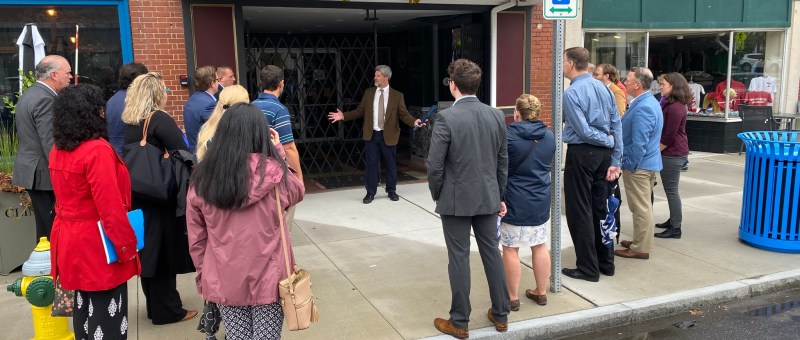
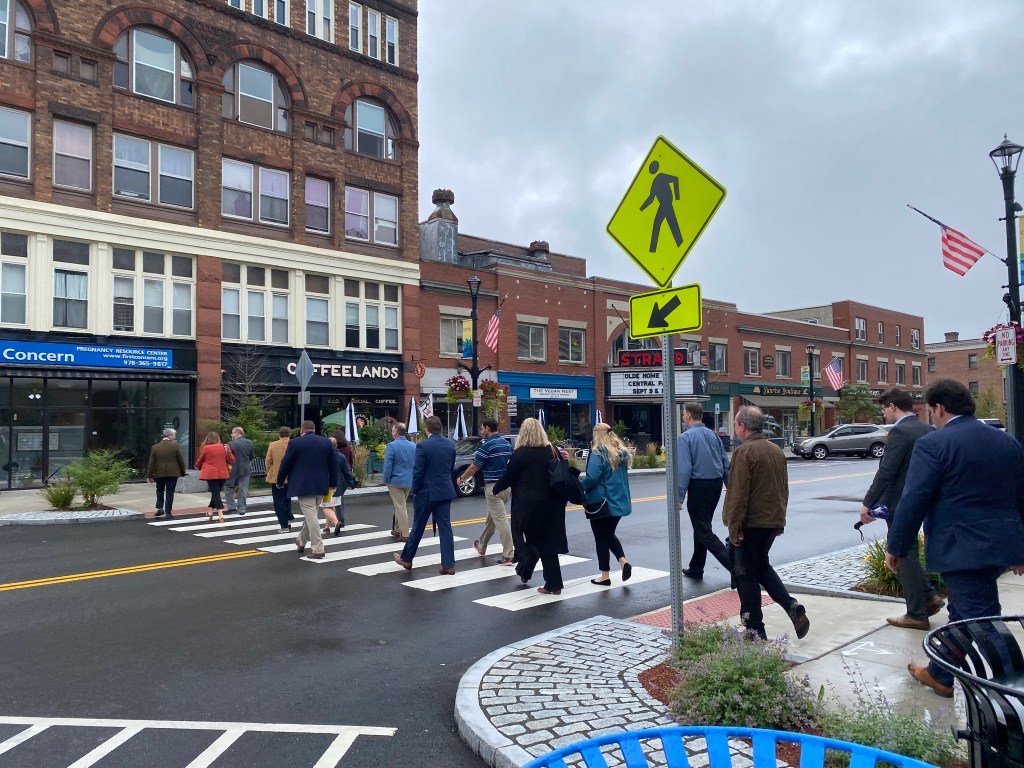
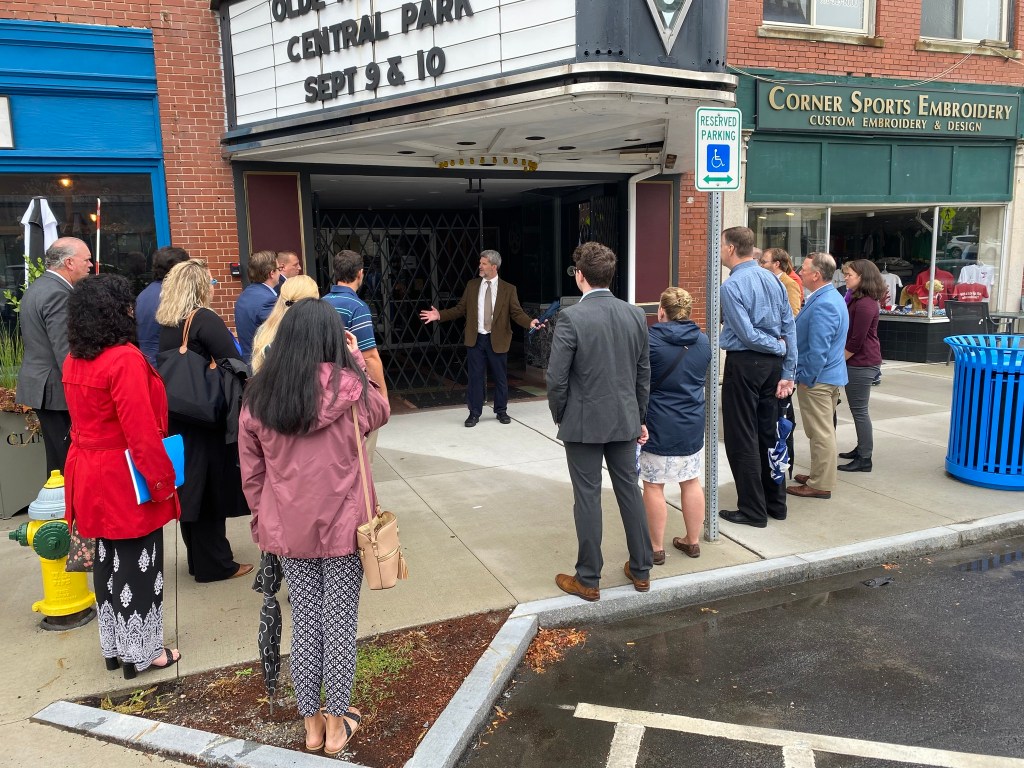
I was thrilled to take part in yesterday’s Clinton Area Chamber of Commerce economic development summit at The Museum of Russian Icons. So great to see local, state and business leaders come together to talk about keeping our momentum going. After a breakfast meeting, we took a walking tour of downtown, including a look backstage at The Strand Theatre.

We’ve come a long way, but there’s still so much more we want to do. It’s nice to know we have the support of our delegation at the State House — Harriette Chandler, Senator John J. Cronin, and State Representative Meg Kilcoyne — and a newly invigorated Chamber in our corner. Thanks also to Tim Murray and his team at the Worcester Regional Chamber of Commerce for their help in pulling this event together. #thisisclinton

Take the hazard mitigation survey!

The town of Clinton is currently updating its Hazard Mitigation Plan. This plan is important because it helps the town plan and receive funding for projects that reduce the risk of injury or damage to property from future natural hazard events such as flooding, severe storms, and drought.

The Clinton Local Hazard Mitigation Committee needs your help and input as it gathers information for the plan. The information you provide in the attached survey will help coordinate activities and identify projects. The survey should take less then 10 minutes to complete and responses will remain anonymous.

Please take a few minutes to complete the survey today. It’ll go a long way toward making sure Clinton gets the funding it needs to help fight future natural disasters.

If you need reproductive health care, get real reproductive health care

In light of the Supreme Court’s declaration of war on female bodily autonomy, it’s more important than ever that people seeking reproductive health services get help from real health-care professionals.

The Massachusetts Attorney General’s Office has recently issued a consumer advisory warning patients seeking reproductive health services about the limited and potentially misleading nature of the services provided by crisis pregnancy centers. In Massachusetts, abortion remains legal, and people have a right to access comprehensive reproductive health care.

Unfortunately, in Clinton and other communities, many crisis pregnancy centers present themselves falsely to women in need of real help during what can be a confusing, troubling time. They do not provide comprehensive reproductive health care. Instead, despite what they advertise, they are organizations that seek to prevent people from accessing a full complement of reproductive health-care options, things like contraception and abortion care.

If you or someone you know needs reproductive health care, please make sure they seek out a licensed reproductive health-care provider by talking to their doctor or by checking this list.

Statement on June 1, 2022, Select Board meeting

At the June 1, 2022, Select Board meeting, I placed an item on the agenda that shouldn’t have been there. Once this mistake was made, however, I could’ve done things differently. I did not and, because of my mishandling of the discussion, the meeting went totally out of control.

The way I treated members of the board and members of our community was unacceptable.

I am ashamed of my actions. I apologize to my board, and to anyone who was at the meeting or watching at home. Most important, I apologize to the entire town. You elected me to serve you, and I did a poor job of doing that on Wednesday. It was by far the lowest point in my five years on the Select Board.

The town of Clinton deserves better than what it got from me on June 1. I promise I’ll learn from this mistake, and I pledge to serve you better in the days ahead.

Clinton designated Green Community in Massachusetts, awarded $164,753 state grant to support energy efficiency projects

One of my first goals as selectman was to move Clinton toward meeting the standards necessary to be named a Green Community in Massachusetts. Today, I’m proud to say that we have done it, earning nearly $170,000 in state grant funding to go along with the designation, money that will be used for energy efficiency projects going forward.

We’re also eligible for future Green Communities grant funding, all while making Clinton more energy efficient and sustainable for generations to come.

State Representative Meghan Kilcoyne, Department of Energy Resources Commissioner Patrick Woodcock, Board of Selectmen Chair Sean Kerrigan, Town Administrator Michael Ward, and Green Communities Director Brian Sullivan all joined at Central Park in Clinton.

What I’m even more proud of, however, is the team effort we undertook to get here. This work spanned nearly every town department, from facilities to schools to economic development. We had a tremendous team at the regional and state level helping us as well, from technical assistance completing the applications by the Montachusett Regional Planning Commission to guidance from our Green Communities coordinator, to support from Senator Harriet Chandler, former Senator Dean Tran and former Representative Harold Naughton. So I was especially happy when a key member of Harold’s staff during this effort and his successor in the State Legislature, Meg Kilcoyne, was able to join us and officials from the state to make this announcement earlier today.

Thanks to everyone in town who helped with this process, and who’ll help continue our Green Community journey. And thanks to the Baker-Polito administration for supporting our energy efficiency efforts with its generous grant.

It’s a great day for Clinton.


Full press release below:

CLINTON – As part of the Baker-Polito Administration’s celebration of Earth Week in the Commonwealth, today state and local officials traveled to the Town of Clinton to announce the designation of nine Massachusetts cities and towns as Green Communities. The municipalities, which have committed to clean energy and energy efficiency goals to reduce energy usage and lower greenhouse gas (GHG) emissions through the program and are now eligible for grants totaling over $1.4 million. The Town of Clinton was presented with a $164,753 grant, which will support energy efficiency projects and the completion of weatherization projects at Clinton’s Town Hall and library.“

During the COVID-19 pandemic, our cities and towns have overcome significant obstacles to protect public health while continuing to make progress toward our shared energy and environmental goals,” said Governor Charlie Baker. “We are proud to support the Commonwealth’s municipalities through the Green Communities program to help them save on energy costs and contribute to the Commonwealth’s statewide efforts to achieve Net Zero emissions in 2050.”

“We are pleased to welcome the Town of Clinton and eight new municipalities to the Green Communities program and look forward to working with them to pursue energy efficient solutions that reduce emissions and energy costs,” said Lieutenant Governor Karyn Polito. “We are grateful to our local officials for their efforts to adopt innovative clean energy measures, and we are proud to work with our Environmental Justice communities to ensure cleaner and healthier communities across the Commonwealth.”

With today’s designation, 280 of the Commonwealth’s municipalities have earned a Green Communities designation which represents 87 percent of the Commonwealth’s population. 88 percent of environmental justice communities are Green Communities, including Clinton.

The 280 Green Communities range from Great Barrington to Newburyport and are home to 87 percent of Massachusetts’ population, in municipalities as large as Boston and as small as Peru. All Green Communities commit to reducing municipal energy consumption by 20 percent each, and this new group of nine cities and towns have committed to reduce their energy consumption amounting to savings of 86,875 MMBtus in five years, energy use equivalent to heating and powering nearly 673 homes, and reducing GHG emissions of 5,804 tons, equivalent to taking 1,222 cars off the road. Proposed projects include high-efficient LED lighting upgrades in schools and municipal buildings, electric vehicles for town and school fleets, and renewable thermal technologies such as air source heat pumps.

“During a challenging year, our Green Communities have demonstrated tremendous determination to reduce energy use and pursue ambitious clean energy projects,” said Energy and Environmental Affairs Secretary Kathleen Theoharides. “The Baker-Polito Administration is committed to building on these state-local partnerships and working closely with our municipalities to pursue a cleaner, healthier future for residents in every community throughout the Commonwealth.” “State government agencies often rely on local and city government officials to help implement clean energy policy, and today’s announcement highlights that partnership and celebrates the dedication of these hardworking officials at the municipal level,” said Department of Energy Resources Commissioner Patrick Woodcock. “These nine municipalities will increase their clean energy usage and energy efficiency efforts thus helping the Commonwealth maintain its national leadership role in clean energy and enabling the state to continue making progress in its ambitious emissions targets.”

Since its inception, the Green Communities program has awarded over $137 million in grant funding to the Commonwealth’s cities and towns through designation and competitive grant rounds. Under the Green Communities Act, DOER’s Green Communities Designation and Grant Program can provide up to $20 million annually to qualified cities and towns. The goal of the Designation Grant Program is to support communities’ investments in energy efficiency and renewable energy projects that further the clean energy goals determined by the designated communities. Initial designation grants are based on a $125,000 base for each designated Green Community, plus additional amounts tied to per capita income and population. Funding for these grants is available through proceeds from the Regional Greenhouse Gas Initiative (RGGI).

During this year’s Earth Week in Massachusetts, the Baker-Polito Administration is highlighting its commitment to supporting the Commonwealth’s Environmental Justice communities and ensuring that all residents are protected from environmental pollution can enjoy a clean and healthy environment. During Earth Week, the Administration is holding events throughout the Commonwealth spotlighting important initiatives, including the expansion of tree planting through the Greening the Gateway Cities Program, increasing access to healthy, nutritious food by supporting urban farms, and ensuring clean water by providing grant funding to local municipalities.

“Climate change presents an existential threat to our environment. So, I am incredibly proud that Clinton and Princeton have chosen to be designed as Green Communities in the pursuit of clean energy and to grow their local economies,” said State Senator Harriette L. Chandler (D-Worcester). “I am grateful that the state can provide this grant money to help these town achieve their goals.”

“Congratulations to the Town of Princeton on receiving a Green Community designation. I applaud their efforts and investment in energy efficiency projects which further their clean energy goals,” said State Representative Kimberly Ferguson (R-Holden). “Many thanks to the Baker-Polito Administration, DOER, and EEA for continuing to support our municipalities, and for partnering with them to help support their energy reduction plan and implementation of energy efficiency projects.”

“I am thrilled that the Town of Clinton will be a designated Green Community. This will allow the town access to critical support and funding in their efforts to invest in energy efficiency and help achieve our local green energy goals,” said State Representative Meghan K. Kilcoyne (D-Worcester). “I offer my sincere congratulations to local officials for their efforts on this achievement and look forward to partnering with both the State and town to achieve our goals for a cleaner future together.”

On March 26, 2021, Governor Baker signed comprehensive climate change legislation that includes nation-leading provisions related to Environmental Justice. Recognizing the significant impact of climate change on Environmental Justice communities overburdened by poor air quality and disproportionately high levels of pollution, the legislation statutorily defines Environmental Justice and environmental burdens, including climate change as an environmental burden. The legislation also expands Massachusetts Environmental Policy Act (MEPA) review to require an Environmental Impact Report for all projects that impact air quality within one mile of an Environmental Justice Neighborhood and requires the Department of Environmental Protection to conduct a stakeholder process to develop a cumulative impact analysis as a condition of permitting certain projects. This change would, for the first time, require the agency to evaluate not just individual project impacts but also historic environmental pollution throughout the community through the permit process.

In December of 2020, the Baker-Polito Administration released two reports – the Massachusetts 2050 Decarbonization Roadmap Report and an interim 2030 Clean Energy and Climate Plan (CECP) – that detailed policies and strategies to reduce emissions and combat climate change. The roadmap outlined the need to enhance energy efficiency measures and decarbonize existing buildings which would include most municipal and town buildings like schools, police departments, and water facilities.

FY2022 Budget season is here

The Board of Selectmen kicks off its Fiscal Year 2022 budget review process at tonight’s board meeting.

We’ll be meeting with representatives of the following departments to hear their proposals for the next fiscal year budget, to be voted on by voters like you at June’s Annual Town Meeting:

  • Bigelow Public Library
  • Treasurer-Collector
  • Council on Aging
  • Police
  • Public Works

The meeting starts at 7 p.m., and budget hearings should begin around 7:30 p.m. Tune in on Clinton public access television or online at the Clinton, Mass. YouTube page.

Water Street lights provide a preview of new downtown

Looking for a preview of the new streetlights coming to the High Street business district? Check out the newly installed lights on Water Street, from High to Main street.

The same type of lights will be part of our Clinton Downtown Revitalization Program, scheduled to be completed this year. These LED lights are more energy efficient and they’re adjustable, so we’ll be able to customize the areas lit. It’s all part of our effort to make downtown a safer and more pleasant place to walk, work, shop and live.

For more information on the Downtown Revitalization Program, visit the link above, check out our Facebook or Twitter feeds, or sign up for email updates as the project moves on.

And, as always, don’t forget to support our local businesses. They need our help now more than ever.

Stay home for the holidays

As expected, the new weekly COVID-19 numbers put Clinton firmly in the state’s red category again this week.

The data shows a steadily growing rate of infection in our town, just as we’re entering the cold holiday months. It’s not good news:

  • Our percent positivity rate is 7.18 percent, up 23 percent since last week and triple what it was a month ago.
  • Even worse, our average daily incidence rate (per 100,000) is 40.1, up 36 percent since last week and quadruple (four times) what it was a month ago.

No one wants to take away your holidays, especially after the long, hard year we’ve all had. But the fact is that, more and more, this disease is spreading through extended indoor gatherings with people outside your household. That means the big, traditional Thanksgiving dinner is a really bad idea this year. So, please, consider limiting your holiday gatherings to people within your immediate household.

There are plenty of recipe ideas for a smaller celebration. Or, like my family is, you could consider postponing the big dinner until next summer, when things will hopefully be much better.

If you are hosting Thanksgiving this year, please keep doing what we’ve all been doing to beat this virus and be sure to follow CDC guidelines for safe holiday celebrations:

  • Have a small outdoor meal with family and friends who live in your community.
  • Limit the number of guests.
  • Have conversations with guests ahead of time to set expectations for celebrating together.
  • Clean and disinfect frequently touched surfaces and items between use.
  • If celebrating indoors, bring in fresh air by opening windows and doors, if possible. You can use a window fan in one of the open windows to blow air out of the window. This will pull fresh air in through the other open windows.
  • Limit the number of people in food preparation areas.
  • Have guests bring their own food and drink.
  • If sharing food, have one person serve food and use single-use options, like plastic utensils.

This summer, we came together and kept our town nearly COVID-free. Now, we have to work together again to get through the winter. We need to be safe, smart and diligent. What we do over the next few weeks will determine our fate for months to come.

From my family to yours, we wish you a safe, happy Thanksgiving.