3 ways we can make Town Meeting better

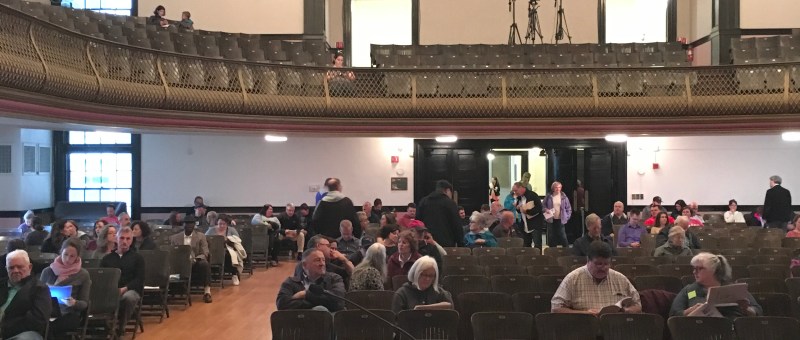
Monday’s Annual Town Meeting in Clinton had trouble making its quorum of 200 voters and, once it did, saw debate bogged down at times by confusion over how municipal budgets are put together and how a few warrant articles would affect the town. It was my first Town Meeting as a selectman, so I got to look at things a little differently. The good thing is that now, instead of complaining, I’m in a position to try and change things.

Here are three things I’d like to see us try in an effort to make Town Meeting better.

1. Publicize it like an event, not an obligation. Town Meeting has been the first Monday in June in recent years, but obviously not everyone knows that. We need to publicize Town Meeting better and educate people why it’s important that they go. With a mix of new technology (the soon-to-be-relaunched town website and email/text/voicemail blasts similar to what the School Department currently uses) and old get-out-the-vote methods (signage, posters and the like), we should make sure everyone who’s interested in town government knows when Town Meeting is and what’s at stake.

2. Modernize our budget presentation. Just because people show up at Town Meeting, however, it doesn’t mean they’re experts in what we’re doing there. The town is making progress in explaining how our annual budget is put together and where your tax dollars go (and I applaud the Finance Committee for holding a public hearing this year to answer questions, however sparsely attended it was), but the budget itself is dense and indecipherable to most residents.

This past January, I attended a workshop at the Massachusetts Municipal Association’s annual meeting about budget best practices, and I’d like to see us move toward the guidelines provided by the Government Finance Officers Association — a sort of Good Housekeeping Seal of Approval for municipal budgets. Northborough’s town administrator was one of the presenters at the workshop. That town’s budget is a real pleasure to read, with an outline of how the town comes up with the budget each year, details of the town’s fiscal policies (including how they handle free cash), and a narrative of what money is being spent on, and why. (Check it out: MMA Northborough proposed budget workshop 2018.)

The GFOA Distinguished Budget Award focuses on information, transparency and accountability. It’s a high standard, but one our taxpayers deserve. (Download a copy of the MMA Budget Best Practices workshop, including those GFOA guidelines, here: MMA GFOA Budgeting Best Practices Workshop 2018.)

3. Stand up for every article. If we’re going to do a better job explaining what people are voting on at Town Meeting, we shouldn’t stop at the budget. I’d like to see every article beyond routine annual items introduced by whatever board or entity sponsored it. If the Finance Committee wants to take advantage of our local meals tax option, they should be able to explain why, and take any questions. Same thing if the Planning Board wants a yearlong moratorium on multi-unit housing development. As selectman, I’m happy to defend an article I believe in, but that doesn’t mean I’m an expert on everything on the warrant. If we think an issue enough to put it to voters, someone should be able to explain it clearly.

These are just three ways I think we can make Town Meeting an improved experience that will better attract and inform voters. What do you think? Leave your ideas below and let’s make Town Meeting better together.


Warrant for June 4 Annual Town Meeting and proposed Fiscal Year 2019 budget

The final warrant for the June 4 Annual Town Meeting, including the proposed Fiscal Year 2019 budget, is up on the town website, or available as a PDF below.

As always, if you have any questions, leave a comment here or on my Facebook page, or email me at kerriganforclinton@gmail.com. Hope to see you June 4!

DOWNLOAD THE 2018 Annual Town Meeting Warrant and proposed FY19 Budget HERE

FY19 Budget Q&A is Tuesday, May 22, at 7 p.m.

Thanks to the Finance Committee and Chairman James Tomolo Jr. for holding a public hearing/Q&A session this Tuesday, May 22, at 7 p.m. in the selectmen’s chambers of Town Hall to talk about the Fiscal Year 2019 town budget.

It’s a great chance to learn more about where and how your tax dollars are spent, in advance of Town Meeting on June 4.

Tomolo told the Clinton Item “We’re going to listen to everyone,” and I encourage anyone interested in getting up to speed on this sometimes complicated topic before we vote on June 4.

Here’s the most recent draft budget I’ve been given, from our May 16 meeting. I can’t guarantee it’s what will be shared on Tuesday but it should be close: FY19 DRAFT budget 05.16.18

LINK to full story in Clinton Item.

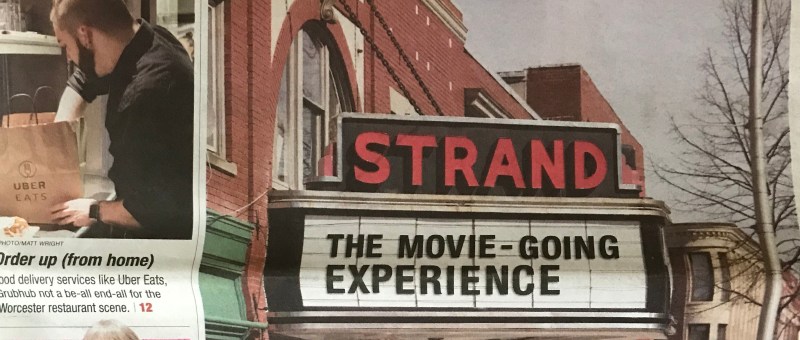
Worcester Business Journal shines spotlight on the Strand

What a treat to check the mail tonight and find the Strand Theatre, one of High Street’s best local businesses, looking back at me on the cover of this week’s Worcester Business Journal.

It’s a story on how small, local theaters are using a different business model — one that focuses on creating a gathering place and providing good value for customers — to compete with the giant chains. Co-owners Rob Nierintz and Bill Grady are featured, along with the Elm Draught House in Millbury.

WB Journal Editor Brad Kane introduces the story in his editor’s note. “At a time when the moviemaking business is focused on huge opening-weekend box office numbers, the Strand and the Elm offer the pleasures of a different movie-going experience,” he says. “Their ticket prices are cheaper, their food is less expensive, the auditoriums are simpler, and watching the movie is only part of the entire sensory experience.”

That sense of community is something we can build on here. To reach its full potential, High Street has to be about more than just doing business. It has to be a place where people want to be, a place that adds value to their lives.

Rob said it best when he talked about how the Strand fits into Clinton’s downtown: “There’s something very special and nostalgic about it being on this street.” I remember covering town for the Daily Item in the early 1990s, when redeveloping the Strand was a key goal for downtown. We’re lucky to have the Strand, and so many other forward-thinking business owners, on High Street, and it’s great to see that their efforts aren’t going unnoticed.

Check out the whole story HERE.

Town meeting season kicks off with public hearings on marijuana bylaw and a temporary moratorium on multi-family dwelling units

The Planning Board is holding public hearings next Wednesday, May 2, in the lower conference room of Town Hall to discuss two significant articles being proposed for the June 4 Annual Town Meeting warrant. I encourage anyone interested in either of these issues to attend and have your voices heard.

At 7 p.m., the Planning Board will hold a public hearing on a proposed temporary moratorium on multi-family dwelling units. I applaud the Planning Board for taking this issue on head first, by proposing we pump the brakes and take a year to see how recent changes to our local development patterns will affect community character, existing neighborhoods, and town infrastructure. The warrant article would call for a one-year (until July 1, 2019) moratorium on multi-family dwellings, here defined as a building containing three or more dwelling units.

At 7:15 p.m., there’s a public hearing on a proposed recreational marijuana establishments bylaw. Recreational marijuana (as opposed to medical marijuana, for which we already have a bylaw on the books) has been in the news a lot lately, so you’re probably familiar and have an opinion one way or another. As far as I’m concerned, the town overwhelmingly supported recreational marijuana in the 2016 election, approving Question 4 by more than 900 votes, and that decision should be respected. Recreational marijuana is obviously something the majority of Clintonians want, and it could provide a tremendous revenue stream for the town at a time when it is sorely needed.

But even if you oppose recreational marijuana, this bylaw is important because, without it, our town will have no say in what kind of establishments we want. We need to get this one right.

Please come out on May 2 and learn more about these two important potential warrant articles.

Read Across America Day 2018

I was honored to be asked to read to my son Kevin’s first grade class at Clinton Elementary School this morning, part of Clinton Public Schools’ celebration of Read Across America Day. It wasn’t just a great way to share a lifelong love of reading, but an interesting look into how young people view town government.

2018 reading day 2

My book was Green Eggs and Ham, not just because it is Dr. Seuss’s birthday, but because it’s about trying new things and being persistent — two things I’ve found crucial in my time as selectman. I also love the economy of phrase the book uses — Dr. Seuss wrote it on a dare from his publisher that he couldn’t do an entire book using no more than 50 unique words. It’s a great example of how less can be more, even when you’re trying to convince someone to take a chance.

2018 reading day 1

After the reading, the children offered their suggestions on how they would make Clinton better. It was pretty impressive for a bunch of 7-year-olds: Suggestions included more affordable housing options, safer roads, and fun things like an ice rink and an arcade. Even at that young age, people in this town get what will make Clinton a place we can all feel at home: A diverse housing stock that offers something for everyone, regardless of income; quality public services; and places where we can gather and enjoy ourselves and each other’s company.

2018 reading day 4

I left the even feeling recharged and excited about this town’s future. We have myriad challenges ahead, but if we all work together for the things we agree our town deserves, we’ll get where we want to go.

Thanks to Erin Mortimer and everyone at Clinton Elementary for putting on a great event. I hope I can come back again soon.

February office hours announced

Clinton Selectman Sean J. Kerrigan is happy to announce office hours for the February 2018, a combination of in-person and online sessions intended to improve communication with the residents and business owners of Clinton.

As always, residents are welcome to submit questions, thoughts and concerns though Facebook, online at kerriganforclinton.com, or via email at kerriganforclinton@gmail.com.


FEBRUARY 2018 OFFICE HOURS SCHEDULE

IN PERSON:

Wednesday, February 7, 10 to 11 a.m.: Clinton Senior Center, 271 Church Street

ONLINE/FACEBOOK (FACEBOOK.COM/KERRIGANFORCLINTON):

Wednesday, February 14, 9 to 11 a.m.

Wednesday, February 21, 11 a.m. to 1 p.m.

Wednesday, February 28, 7 to 9 p.m.

Holiday 2017 office hours schedule announced

I know it’s a busy time for everyone, but I’ve scheduled some office hours around the holidays in case anyone has questions or concerns about how the town is being run.

As always, residents are welcome to submit questions, thoughts and concerns though Facebook, online at kerriganforclinton.com, or via email at kerriganforclinton@gmail.com.


HOLIDAY 2017 OFFICE HOURS SCHEDULE

IN PERSON:

Friday, December 22, 9 to 11 a.m.: Coffeelands, 50 High Street

Tuesday, January 2, 10 a.m. to 12 p.m.: Selectmen’s Chambers (Second floor), Town Hall, 242 Church Street

ONLINE/FACEBOOK (FACEBOOK.COM/KERRIGANFORCLINTON):

Wednesday, December 27, 12 to 2 p.m.


Why I voted to lower Clinton’s property tax shift

On Wednesday, the Board of Selectmen held its annual tax classification hearing. At it, I voted to lower the town’s tax shift two points, from 160 to 158 percent. In the broadest of terms, it means we’re going to continue to close the gap between residential and commercial/industrial property tax rates in an effort to make the town more appealing to businesses. The new residential rate is $16.98, the new CIP rate is $30.73.

As a result, business owners will pay a little less next year and residential taxpayers will be paying a little more — about $20 over the normal increase for an average home — to make up the difference.

It wasn’t an easy decision, but I sincerely think it’s best for the town, and I wanted to explain why I voted the way I did.

First, some background: Every year, the Board of Selectmen is responsible for setting the town’s property tax rate. In Clinton, where we have a split rate — one for residential property and another for commercial, industrial and personal property (CIP) — that involves deciding how much more the CIP rate will be. The total amount of property taxes raised remains the same. It’s simply a matter of how big a share each group pays.

Here’s more, from the state Department of Revenue:

An amendment to the Massachusetts Constitution endorsed by the electorate in 1978 resulted in the Classification Act. This Act requires municipalities to classify real property into one of four classes, according to use: residential, open space, commercial and industrial.

Cities and towns that are certified as assessing property at full and fair cash value may elect to shift the tax burden among the major property classes within certain limits established by law. The adoption of different rates does not change the total property tax levy; rather it determines the share of the total levy to be borne by each class.

After many years at the maximum shift, the board began to chip away at the business rate in 2013. Since 2015, it’s moved from 165 percent to 162 to 160. It’s small but steady progress, a sign to the business community that we understand their part in making Clinton what it is.

When I ran for selectman, I said I’d consider any reasonable way to attract new business to town, and to support the businesses already here. Clinton isn’t like many of our neighbors: We were born from the mills, and industry has been part of our fabric for more than 150 years. I firmly believe that, if we are to reach our full potential as a town, we need to embrace that history and get Clinton back in business.

We’ve got a long way to go. The town’s three priority development targets all have challenges, and High Street is currently facing a vacancy rate of more than 30 percent. Still, I’m hopeful. Our downtown is the kind of walkable, diverse and resilient district many towns only dream of. We’ve got streetlight, facade improvement, and wayfinding projects in the works, and people are starting to notice.

I think that continuing the progress we’ve made will keep this positive momentum going. Our FY2017 commercial/industrial rate of $31.95 is the 22nd highest in the Commonwealth, higher than Berlin, Bolton, Fitchburg, Lancaster, Leominster, Marlboro, Maynard, Northboro, West Boylston, and a host of other neighboring communities. If we are to compete, we need fewer liabilities and more advantages. I believe that lowering the shift represents one such potential advantage.

I don’t like raising taxes. But I firmly believe that strengthening our long-term economic foundation is worth sacrificing some short-term relief. If we can attract more businesses, if we can fill some of those empty storefronts and warehouses, we’ll not only broaden and our diversify our tax base, eventually giving all of us some relief. We’ll also be improving the quality of life for everyone who lives here. More places to eat, shop and work at. A better Clinton we all can be proud of.

Still, I know some of you think this is a bad idea. Good news: I’ve been named to a special board subcommittee to recommend future changes to the tax shift, and I need your help. If you have an opinion, if you agree or disagree, please let me know. As I said on Wednesday, we were elected to make tough decisions like this. I’m happy to explain more to anyone why I voted the way I did.

Furthermore, I promise to work with the Assessor’s Office to find assistance for those hardship cases who need it. Here’s a link to available exemptions, including those for the elderly, disabled and veterans.