Talking and listening

He sees all who go there, hears all they have to say, talks freely with everybody, reads whatever is written to him.

_The Albany Evening Journal on Abraham Lincoln, 1860

I’ll never be confused with Abraham Lincoln, but I came across the quote above last week and it just seemed to capture the part of this campaign I’ve enjoyed the most: Talking and listening.

One word that has come up a lot in my talks with voters — from Republicans and Democrats, old and young — is “transparency.” People want to know what their local government is up to, and want to make sure their voices and concerns are being heard.

That’s why, if you elect me to the Board of Selectmen, access will be a key priority. I want to make sure everyone, no matter who you are or where you live, feels like they have a voice in this town.

To me, access is about two concepts: One nuts and bolts, and another philosophical.

The nuts and bolts shouldn’t be hard.

  • Publish a town report every year.
  • Break down the budget in an easy-to-understand way. If we’re asking people to pay for something, they should know what it is and why we need it.
  • Bring town government’s online presence into the 20th century, with a functional, user-friendly website.
  • Broadcast all Board of Selectmen meetings online, to accommodate those residents without cable television, and maintain a library of past meetings online, like what already exists for the School Committee.
  • In addition, I’ll hold regular office hours in whatever way is most convenient for you: In person, virtually via Facebook, or a combination of both.

The philosophical part might be trickier but, in many ways, it’s more important. Over the past several weeks, I’ve met with anyone who would talk with me, supporters and skeptics alike. Some think we’re on the path to being the state’s next big success story. Others aren’t so sure. But every one of them loves this town and sees its potential. We can’t let our differences get in the way of what we all want: A better Clinton.

As selectman, I’ll seek advice from anyone who’ll offer it. I’ll consider any legitimate idea for making Town Hall work better, for bringing more business into town, and for keeping Clinton an affordable, enjoyable place to live.

As town officials, we need to overcommunicate what we’re doing and why we’re doing it. I’ve said it before but, in order to enact any meaningful change, we need to engage every stakeholder in town. There will be differences in opinion, but we cannot continue to let opposition and gridlock to take root in miscommunication.

Let’s figure out what we want this town to be and get on the path to making that future together.

It’s Memorial Day weekend, and I know a lot of people are out of town, but with two weeks until Election Day, I’m going back out there to tell people how I’ll earn their vote. If I miss you, please get in touch. I want to hear from you.

And speaking of Memorial Day, take advantage of the long weekend and nice weather (while it’s still here) to reach out to your neighbors. Facebook and other technology makes it easier than ever to connect with people, but this campaign has taught me that unplugging and actually talking to people is where real community comes from. An article in yesterday’s New York Times says it well:

For generations, neighborly relationships have helped Americans make an asset of the nation’s diversity. Friendly conversations worked, however imperfectly, to help us glean some perspective beyond the limitations of our own experience. Today, however, technology too frequently nudges us into intellectual niches. Intimate and arms-length relationships may be comfortable and easy to maintain, but we hurt ourselves by making strangers of the people who live nearby. Invest some additional time getting to know your neighbors. You never know what you might teach them — or what they might teach you.

Looking forward to learning more from you this weekend. Hope to see you soon.

Winning the game of tag

Heading out for an afternoon of talking with voters, but wanted to take a quick minute to talk about a story I saw in today’s Boston Globe, and a problem Clinton — along with almost every other town in the region — is facing.

Graffiti.

The Globe story talks about the Longfellow Bridge, which is nearing the end of a five-year, $300 million reconstruction project. It won’t even reopen until next spring, and yet it’s still already a popular target for graffiti “tagging.”

Read the story and you’ll see how graffiti isn’t just a Clinton problem.

“At high-profile pieces of public property, including the Longfellow Bridge,” the story reads, “the struggle to keep ahead of graffiti never ends.”

Obviously, it’s a struggle here too. Last week, work crews from the Worcester County Sheriff’s Department cleaned up graffiti in town, spray-painting bridges and underpasses dark gray, in many ways covering up ugliness with ugliness.

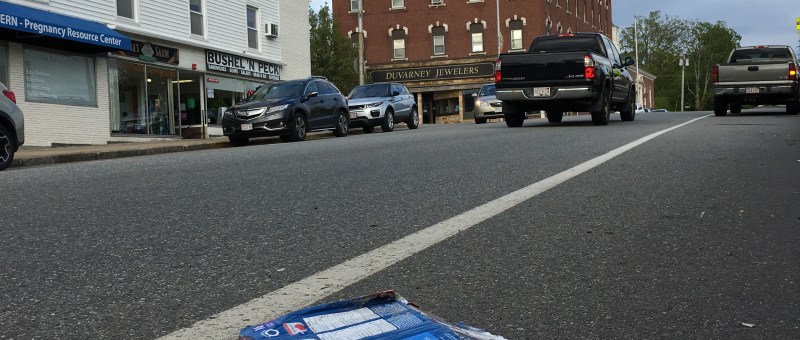
We’ll never be able to stop vandals from being vandals (the photos above were taken today, so some of these people were right back at it). Increased enforcement helps, but Boston has four full-time employees whose only job is to fight graffiti vandalism. We don’t have that luxury here. What about complementing police efforts with something more creative?

The Globe story also quotes Nate Swain, a street artist from Charlestown who works at Artists for Humanity, a nonprofit group that teaches art to low-income and underserved children.

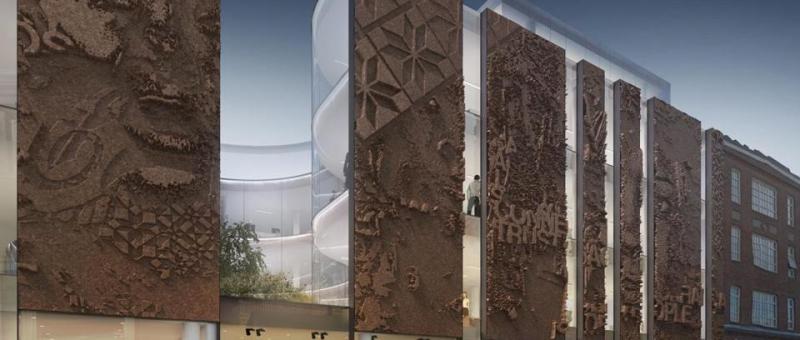
What if we partnered with a similar organization and gave our local youth and artist community a chance to express themselves on property that’s otherwise routinely defaced by vandals? In the street art hierarchy, murals often come out on top. Organizing an effort to improve local artistic expression and head off graffiti would be a low-cost, high-return proposition that could let our police focus on other more important things, while keeping our public infrastructure looking beautiful. (And it might give Profile Rock a much-needed break.)

Who knows? Maybe one of these groups might want to settle down here, and turn a vacant property into its headquarters, much like Artists for Humanity did in South Boston. Their program is so popular, in fact, that they’re expanding to accommodate more youth.

“Artists for Humanity is building a new generation of Boston-based artists and creative thinkers, and this expansion project will allow them to provide even more opportunities for our youth to become involved in creative work environments,” Boston Mayor Marty Walsh said in announcing the expansion last year. “Their innovative approach combines arts and culture with STEM curriculum to give our young people the skills to think critically and obtain well-paying careers in the future.”

The bottom line is that we can learn a lot from the communities and organizations around us. If you elect me to the Board of Selectmen on June 12, I will chase down every creative, affordable solution I can find to help make Clinton better.

I’m out and about today talking to voters and seeing how they think we can make our town better. If you see me, say hello. And if you need a sign, hit me up. Happy to drop one off.

Clean streets, clear sidewalks

No one likes litter. It’s dirty and demoralizing. And, in a town like Clinton — one that’s struggling to attract business and the expanded tax base that comes with it — litter, pollution and blight send a clear message to the outside world that we don’t care how our town looks.

If elected to the Board of Selectmen, one of the first things I’ll do is start an effort to keep our streets clean and our sidewalks clear. It’s an easy way to restore community pride and appearance, and to keep Clinton walkable for all residents. Most important, it sets an example of service and responsibility to our children, our neighbors, and anyone who visits here.

As selectman, I would work to organize regular town-wide cleanup days, and initiate Clinton’s participation in the Great Massachusetts Litter Cleanup project. I’d also work with the Board of Health and DPW to make sure citizens know what is expected of them regarding litter, sidewalk maintenance and snow removal.

Speaking of snow removal, I’d take a page from a number of other communities and team up with the Council on Aging and School Department to establish a program to identify and assist people who need help with snow removal.

It’s a model that’s worked well elsewhere, and a great example of how we could look to other cities and towns for good ideas that can be implemented in Clinton. In addition to keeping seniors safe and our sidewalks clear, cross-generational programs like this have the potential for many other benefits.

  • In Nutley, NJ, Mayor Alphonse Petracco says their Shovel Out Seniors program connects the town’s teens with their elders, encouraging new types of communication between the generations.
  • In Hingham, participants in the Good Neighbors Volunteer Shoveling Program report that the friendly contact during storms provides a boost to seniors who might otherwise be snowbound.

Do you have an idea about cleaning up Clinton? Leave a comment below or send me an email at kerriganforclinton@gmail.com. I’d love to hear from you!

Sign up for a better Clinton

Yard signs are in. Help spread the word and show your friends and neighbors that, on June 12, you’ll be voting for a better Clinton.

A cleaner, safer Clinton.

A Clinton where local government is accessible and accountable.

A Clinton with an inclusive, comprehensive plan for smart, aggressive economic development.

A Clinton where the Board of Selectmen sets a tone of courtesy, professionalism, fiscal responsibility, and daring.

I need your help getting word out. Email me at kerriganforclinton@gmail.com or call 617.319.4738 today to get your lawn sign.

Yesterday’s news today

I wanted to follow up on my announcement and give you a little more background on why I’m running for Clinton Board of Selectmen. 

The short answer is I think I can help the town get better. My background is in journalism and marketing/public relations. I’ve made a career out of getting to the bottom of things, looking at problems and issues from different angles, and tracking down people who know what they’re talking about, to get their take on things. As selectman, I’ll seek out other town officials, residents, business owners, state and federal legislators — anyone who can contribute creative solutions to Clinton’s problems.

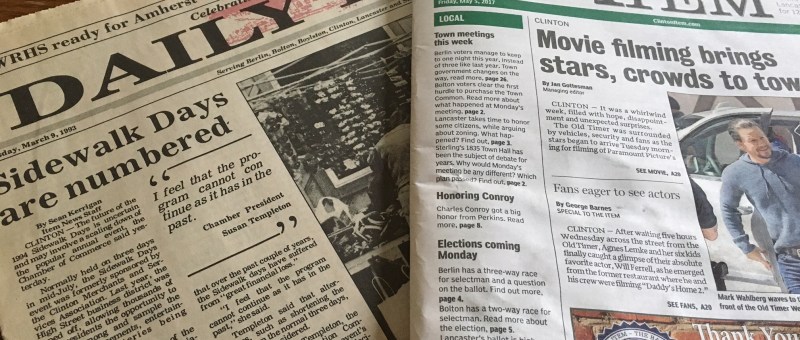
My first newspaper job was 25 years ago, working at the (then-Daily) Item covering the Clinton Board of Selectmen and School Committee. Back then, the newly minted Education Reform law was supposed to save the state’s cities and towns from the crushing costs of education, and our economic development plan was centered on getting someone to reopen the Strand and save High Street.

What’s changed? Well, we were right about the Strand. It’s a perfect example of how something that is special about Clinton can be leveraged to encourage development, improve quality of life, and bring in some tax revenue. We need more of this and, as selectman, I will leave no stone unturned when it comes to improving the town through smart, aggressive economic development.

Unfortunately, more and more it’s looking like the formula Education Reform came up with to determine Chapter 70 school aid is outdated, if not broken. Cities and towns from the Berkshires to Boston are overwhelmed, trying to keep up with state mandates in the classroom and double-digit jumps in health-care and special education costs. The current model is unsustainable.

There is hope, though. State Senator Sonia Chang-Diaz has introduced a bill that would update the formula to adopt the recommendations of a 2015 state commission report that argued the foundation budget doesn’t reflect the rising costs of special education and health care.

Fiscal responsibility is one thing and, as selectman, I will strive to make sure Clinton lives within its means. But being forced to play a rigged game is something else. If elected, I will push our local representatives in the House and State Senate to get state education aid right again.

Some problems don’t change. That doesn’t mean our approach to solving them should stay standing still. In 2017, if we are not moving forward, we are falling behind.

I’m running for selectman because I think I can help the town fight for what its residents need, including a stronger industrial and commercial tax base, and fairness when it comes to funding our schools. I hope you’ll give me your vote on June 12.

Visit kerriganforclinton.com for more information.

Five points

My campaign is built on five main points:

  1. Clean streets, clear sidewalks.
  2. Smart, aggressive economic development that is built on an inclusive, comprehensive plan.
  3. Access for all.
  4. Hyper accountability.
  5. A Board that sets a tone for success, and leads the way for a better Clinton through professionalism, courtesy, and fiscal responsibility.